
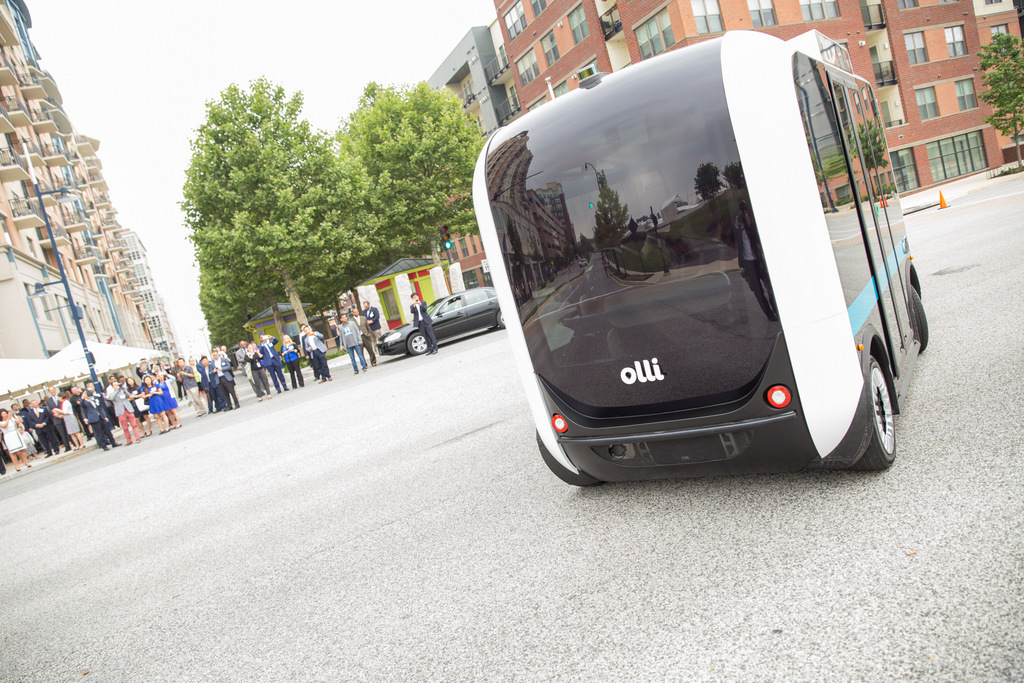
I recently wrote a piece for the Hamilton Spectator on the new self driving bus built by local motors called Olli. The 12 seater bus (currently in beta) that is currently testing on roads in Arizona and Maryland will be joined by around 100 buses in 2017.
Although Olli would never be used to replace mass transit, it has incredible use cases for low transit use areas to help encourage transit. Areas such as rural Ancaster, Flamborough, Stoney Creek, or even suburban routes with low ridership could benefit from something like this. Having this as an option would encourage people to leave the car behind, and could help a transit network grow by bringing more transit to more people at a lower cost than a traditional bus. The story, as it was printed in the Hamilton Spectator on August 18, 2016 is below.
You may have seen it pop up in your Facebook feed and thought: ‘That’s interesting.’ The video that’s gone viral, of small, self driving, electric buses now in operation in Arizona and Maryland, has been seen by more than a million people.
The Olli Bus, as it is called, is the latest product from a company known as Local Motors, a privately-owned company
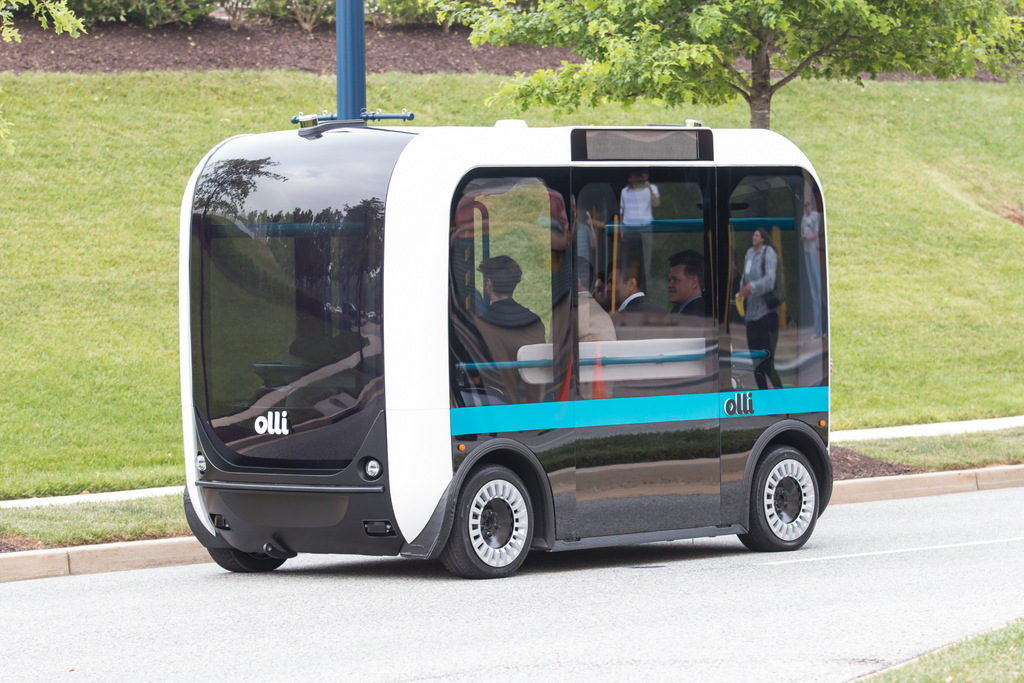
that is taking a unique look at solving transportation challenges. In a recent interview, Mitch Menaker the company’s chief sales officer said they look at engineering and other challenges by engaging a large, open community through their website. The community has grown to more than 60,000 people, and they’ve submitted everything from vehicle designs, to formulae for new plastic and composite materials. When an idea is used by the company, the person who submitted the work is paid an ongoing royalty on every product sold.
Their latest project: Olli, is a 12-seater electric bus that can drive all on its own. It began life as an award winning design for a Berlin contest and has now gone from the drawing board to the streets. Menaker said in an earlier interview that a typical car company might spend seven years and a billion dollars-plus to bring a car to market. Thirty per cent of the bus was created using a 3D printer. The moulds used were also 3D printed. This helped get the prototype built much faster than would have been possible previously.
Jonathan Garrett is the Olli product manager and I recently spoke with him by phone. He told me that Local Motors managed to churn out their first two Olli prototypes in just two months after finishing the engineering and design work.
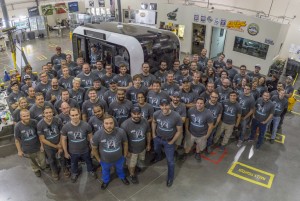
The Olli and Local Motors Team
For those who haven’t seen the video, the Olli is a fully autonomous (self driving) bus that carries 12 passengers. It can drive along a prescribed route picking up passengers not unlike a traditional bus, or it can be tied to a smartphone app that a rider can use to summon Olli right to their door. The applications for this vehicle could include providing service along low travelled routes at a lower cost and lower carbon footprint than a conventional bus. It could be used to provide door-to-door paratransit service for those with mobility challenges. It could even provide more frequent service along an existing corridor, increasing transit accessibility, while doing so at a lower cost than adding a full-sized bus when the ridership needs are lower. Another use would be to provide service in lower density areas to transport people to higher use transit stops like commuter rail, subway, or LRT.
When I asked about the cost, Garrett says their plans include the possibility that a city could simply pay a monthly subscription fee and Olli would provide the vehicles, the training, and service plan, along with future upgrades and replacement buses as they were needed, without the need for a large upfront capital expenditure. From our call, however, Garrett didn’t seem married to the idea and was more interested in working with potential clients to work out something that worked best for them.
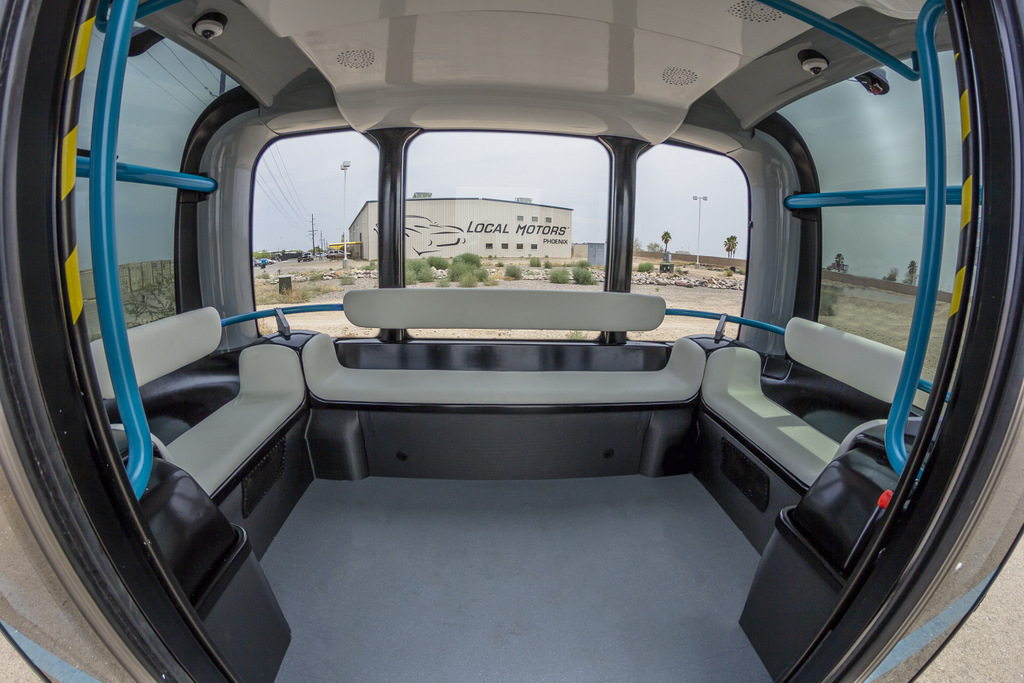
The Interior of Local Motors’ Olli Bus
Since their video went viral they’ve received more than 500 qualified leads from companies and governments worldwide wanting to know more. With interest like that, I asked about future plans. Local Motors has set a goal of producing and delivering 100 vehicles in 2017. With future plans to expand, depending on market demand. Garrett says that Olli can reduce pollution by increasing ridership by bringing transit accessibility closer to people at a lower cost. He was unaware that Ontario has become the first jurisdiction in Canada to offer an autonomous vehicle testing program when I asked him about it, so we’ll have to wait and see if we see them on the roads here any time soon.
Ontario struggles to deal with growing traffic congestion, moving people out of their cars and onto the GO trains and buses is becoming more and more important. Autonomous vehicles will transform the way transportation planners look at moving people around the city and around the region. Ontario has already taken the first steps by creating the regulations for the pilot project for autonomous vehicle testing, but we should be doing more to encourage companies from around the world to come to here to test on our roads. We should start by reaching out to companies working on projects like this to find out how we can be involved in developing the transportation technologies of tomorrow right here.
Howard Rabb is a Hamilton-based entrepreneur, independent consultant and freelance columnist.
CORRECTION NOTICE
An earlier version of this story stated that the Local Motors community consisted of 5000 possible contributors to the platform. This number is actually 60,000. Thanks to LM for pointing that out. I have corrected the above and sent an email to The Spectator to make the same correction.
I apologize for the error.
https://www.youtube.com/watch?v=Ymz4SYVr_EE

Leave A Comment